Author: Steven Harrison

  • Improving the rail passenger experience inquiry

    This was written as part of a UK Public enquiry into the rail system (which I’ve long since given up trying to use)…

    As someone who’s lived in several countries and travelled extensively internationally, I feel qualified in my opinion that the traveller experience on the British railway system is appalling for a country of the UK’s prestige and wealth.

    Aside from the poor state of many of the stations, the frequent lack of easy step-free access and the confusing, extortionate prices and complex rules of the ticketing system, it’s the rolling stock that is of the greatest concern to me as a passenger.

    Then there’s the timeliness and reliability.

    “We’re sorry that the service to/from ______ is late, it was delayed as a result of a signalling failure.”

    How often is this message played out every day in the British rail system? As a qualified telecommunications engineer, I can tell you that signalling in a serial network is so simple that a trained monkey with a few flags could do it. There’s rarely any cross traffic. Scheduling alone should mean that signalling is not even required. To quote from Wikipedia’s [1]article on serial communications:

    “Although a serial link may seem inferior to a parallel one, since it can transmit less data per clock cycle, it is often the case that serial links can be clocked considerably faster than parallel links in order to achieve a higher data rate.”

    This seems to be the issue at the root of many of the problems of British Rail’s operations. The claims that the network is at capacity fall flat when you understand that we don’t need more tracks or larger trains; we need a higher clock rate! (a greater frequency of trains).

    So in a country with a world-leading telecommunications industry, why is it that the signalling system of the railway is in such a decrepit state of repair? For that matter, why are humans still the primary drivers of our trains? I’m certainly not an advocate of removing human control from the system; however, a human-supervised automated system can run at a significantly higher frequency, with greater safety than a human-controlled system simply by eliminating the vagaries of when trains leave the platform, at what rate they accelerate, and at what point they begin to decelerate in order to park at the next platform.

    I find it remarkable that we’re leading the world in allowing the testing and operation of autonomous cars on the road network, a network which is most decidedly parallel and filled with infinitely greater complexity and danger than the rail network; yet while computer driven trains have been common place in other parts for over 25 years we are no-closer to achieving this than a country without any existing rail infrastructure (if anything we are further away than countries with no experience in rail).

    My first suggestion therefore for improving the passenger experience on the British rail system is to remove the driver from the moment-to-moment control of all the trains in the network and move to a modern, digital and computer-integrated train control system which would by its very nature eliminate the need for signalling. To solve this problem, look not at rail engineers; simply engage with the telecoms industry! Network engineers have far more experience designing fast & efficient serial networks than any rail engineer!

    This could be accomplished quickly with a minimum amount of investment, as the control network could be deployed wirelessly (simultaneously offering train passengers towers on which to place cellular service radios for flawless mobile coverage on the rail); and in-trains retrofitted control systems could be applied, giving the computer system access to the throttle and brakes, leaving the doors to be operated by the conductors. Override controls would remain for safety, of course.

    So then back to the first of the problems, the rolling stock. Obviously, retrofitting new computer controls onto the trains is less preferable to the deployment of new, smaller, faster-accelerating and faster-stopping rolling stock with better passenger comfort and convenience. In a country seemingly obsessed with commuting, this daily experience suffered by the vast majority of the British public should be made as comfortable and efficient as possible. The simple fact that it’s impossible to carry on a phone call or use the Internet due to the shoddy network coverage, and even if fixed, would still be impossible due to the noisy, hot and cramped confines of the overcrowded, decades-old trains means that we are losing a truly massive amount of worker productivity every day. When accounting for the additional benefit delivered to GDP of a commuting public able to work on the phone and online during their entire rail journey, the true cost of replacing the rolling stock will be minor.

    So the challenge of why the rolling stock is in such a state; this should be so easy to understand that any business school student would be immediately thrown out for missing the point. The government has created a rail industry in which private companies have monopolies! Private enterprise is driven by one thing, profit. That’s a good thing when used appropriately; however, the bizarre and (to my knowledge globally unique) nature of the rail franchise system eliminates any real competitive pressure, thus encouraging these private operators to profit-take and run existing systems with as little investment as possible.

    Looking at other markets where a semi or fully deregulated rail industry has flourished, it is precisely because the rail operators bid on and “win” slots in the rail network timetable (very similar to how airlines bid for gates and take-off/landing slots) and then are competing with each other for passenger numbers. If I arrive at the station and I have the choice between an old, smelly, uncomfortable train now and a shiny new luxurious train in 20-minutes, many will take the later train if only because they won’t arrive sweaty and dishevelled at their work first thing in the morning. Under the current system, this cannot happen, which eliminates the benefit of a competitive environment.

    To the solution then; the network itself, as an asset of national interest, should be nationalised to the point of ownership, with carefully selected private entities contracted to perform any necessary upgrades and maintenance. The rail operator franchises as they exist today should be totally eliminated; and all rail operators “licensed” to operate anywhere on the British rail network they so choose. The price charged to the operators for various routes and arrival/departure times can then be tuned according to the ever-changing passenger demand so as to encourage an operator to take up the slot, or to increase the revenue returned into the rail network for those busy/profitable routes and slots.

    Conclusions

    When combined together, what would be achieved herein is a network which performs on a timely basis, is totally free of restrictions due to “signalling” and instead relies on computer-accurate scheduling. Human error would be largely eliminated, and competition to deliver the best possible on-board experience would be encouraged to the largest extent possible.

    The improved communications network covering the entirety of the British rail network would return millions of hours of productivity to the economy.

    The proven and demonstrable model of multi-operator competition would be adopted largely unchanged from the air travel industry, meaning a minimum amount of risk.

    The amount of money injected into the underlying rail network would be greatly increased with a demand formula guiding the charges rolling stock operators are required to pay to operate routes & schedules; thereby evening out the profitability of different parts of the country and different times of day and ensuring that the level of service is more consistent across the entire country and around the clock.

    The existing on-board staff could be redirected to a large extent towards customer-facing work, and fatigue would be a far less of a problem as the attentiveness of the computer control never wavers.

    The computer-controlled timing would permit a far more frequent number of services, lessening the need for longer platforms and longer trains.

    The push to newer rolling stock could be combined with a constantly rising standard as to performance requirements for acceleration and deceleration, allowing further increases in frequency.

    The competitive drives of private enterprise would be properly directed towards customer experience, and the careful administration of a critical public infrastructure would ensure standardisation and reliability.

    In a very short time, with very little public money, you would realise an entirely different British rail experience.

    [1] https://en.wikipedia.org/wiki/Serial_communication

  • What I take each day

    It’s a bit of a cliché – guy works in tech, thinks he can live forever… but hey, if we can optimise hardware and software, why can’t we optimise biology?

    So yeah, I’m a big fan of biohacking, and I’ve developed my own protocol off the back of research (and self-testing) from giants like Brian Johnson.

    I take two sets of supplements per day and add a shake of other supplements on most days.

    DISCLAIMER: This information is for entertainment purposes only! I am not providing any health advice nor advising anyone to follow my protocol! Yes, I do make money if you buy using my affiliate link; that’s not to say I’m “promoting” these; I provide the link for information only.

    When shopping for supplements, you have to be extremely careful about quality, combinations, and interactions. I try wherever possible to only select supplements with single ingredients and from organic sources so that I can control the dose and source. You’ll see a few combo tablets on my shopping list, but I’ve cross-checked these with my other supplements to make sure I’m not overdosing – or I’ve adjusted the number of tablets I take in multi-tablet doses.

    You’ll also note that there aren’t a lot of vitamins on this list. I do periodically take a multi-vitamin; however, there is a serious issue with vitamin toxicity when you’re long-term dosing with vitamins. Too much of a good thing can be VERY bad! I tend to stick to herbs and plants, which have had a reasonable human history of consumption, and add in targeted molecules based on modern research. That’s just my approach; you’ll decide how you want to do it.

    How to manage a daily supplement routine

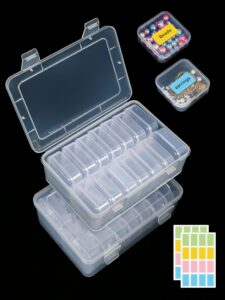
    One question that might come up is how to manage taking all this every day… well, I found that the *easiest* way to stay on program is to pre-sort night and day into single-day containers that I can just grab and take. I pre-sort 2-weeks in advance. I also intentionally allow myself to run out… that gives the body a break from each of the supplements for between 1-2 weeks before it comes back into the rotation.

    Here’s the kicker: commercial pill sorters are nowhere near big enough for this kind of regimen. Here’s what I use instead.

    It’s a craft sorter for beads and such: https://amzn.to/4vSflou

    So onto the list…

    Daytime supplements (all taken as capsules)

    WhatWhyResearch linkBuy it here
    Alpha GPCThis nootropic boosts memory and mental energy. https://pmc.ncbi.nlm.nih.gov/articles/PMC8235064/https://amzn.to/4aV2Twd
    Apple cider vinegarHelps with priming the digestive system before you take any food. Digestion has a massive link (via the gut-brain axis) and is the front line for your immune system. https://www.webmd.com/vitamins/ai/ingredientmono-873/creatinehttps://amzn.to/4xAdyGy
    Bacopa MonnieriThis herb is a powerful nootropic; a lot of my supplements are based on things that can enhance or drive my brain health. It specifically works on memory and critical thinking. https://www.webmd.com/vitamins/ai/ingredientmono-761/bacopahttps://amzn.to/4a7k9yd
    BerberineLike Nootropics, I like to add herbs that provide metabolic support. As a techie, I’m WAY too sedentary… which means I need all the boosts I can get to manage insulin sensitivity, regulate blood sugar, and alter fat metabolism.https://www.webmd.com/vitamins/ai/ingredientmono-1126/berberinehttps://amzn.to/4eMaAqW
    D3The UK is gloomy as hell… we all need this. https://www.webmd.com/diet/vitamin-d-deficiencyhttps://amzn.to/4uLPZrI
    D-Aspartic acid (DAA)There is a real link between aging, testosterone levels, and muscle mass. This compound helps boost your T levels more naturally than taking synthetic T injections. https://www.ncbi.nlm.nih.gov/pmc/articles/PMC5340133/https://amzn.to/4oBjUkQ
    FisetinThis is a powerful senolytic compound that helps clear out junk cells. https://pmc.ncbi.nlm.nih.gov/articles/PMC3689181/https://amzn.to/4vTO458
    Ginkgo BilobaThis herb is a treasure of anti-aging, anti-inflammatory, antioxidant, anticancer, and general brain protecting herb. https://pmc.ncbi.nlm.nih.gov/articles/PMC8901348/https://amzn.to/4xBlyqy
    Green tea extractWe all know green tea is good for us; it’s a powerful antioxidant, stimulant, and general metabolic booster. I drink green tea, but most mornings I’m into yerba mattee and coffee before I’m reaching for the green tea, so the tablets help keep up the tea habit easily. https://www.webmd.com/drugs/2/drug-76714/green-tea-leaf-extract-oral/detailshttps://amzn.to/4gwDgW6
    Inulin fiberWe’re so fiber deficient in the Western diet that our microbiome is often starving to death… inulin is an ideal ‘pre-biotic’ fiber, essentially providing food for the microbiome so that they get moving before I throw down any food for myself. https://www.webmd.com/drugs/2/drug-76714/green-tea-leaf-extract-oral/detailshttps://amzn.to/4eskm0d
    K2This is required to support the bioavailability of the D3 we’re taking. https://www.webmd.com/vitamins/ai/ingredientmono-983/vitamin-khttps://amzn.to/4erapQy
    Maca rootMaca is awesome stuff for supporting general health, particularly focusing on boosting energy & balancing hormones. It boosts sexual performance too, and sex is good for you, so win-win! https://www.webmd.com/diet/health-benefits-macahttps://amzn.to/44d2YYr
    Moringa This African leaf, “the tree of life” has amazing health benefits for energy levels, liver health, inflammation, and regulating blood sugar. https://pmc.ncbi.nlm.nih.gov/articles/PMC9916933/https://amzn.to/4xAtngm
    N-Acetyl Cysteine (NAC)This stuff is great for supporting liver health, and our livers work *hard* with modern diets. It also has a secondary immune support benefit. https://www.webmd.com/vitamins-supplements/n-acetyl-cysteine-nachttps://amzn.to/4vUJnbd
    NMN / NR / NAD+What you’re trying to do is boost NAD+ (Nicotinamide Adenine Dinucleotide), as this is crucial for cellular health and converting food into cellular energy, repairing DNA, and generally staying young, but it declines with age. NMN and NR are both different precursors to NAD+, as you cannot directly swallow NAD+. There’s no comparative research on which precursor works better; I take both! https://www.elysiumhealth.com/blogs/aging101/nmn-and-nrhttps://amzn.to/4eOy7HO
    PterostilbeneThis is the primary antioxidant found in blueberries… unless you eat these every day, supplementing this helps fight cancer and provide wide-ranging anti-inflammatory benefits. https://pmc.ncbi.nlm.nih.gov/articles/PMC3649683/https://amzn.to/4vZDPfY
    Panax GinsengThis is a Swiss-army knife of a herb; it helps with stress, boosts the immune system, and improves memory & thinking. https://www.webmd.com/vitamins-supplements/panax-ginsenghttps://amzn.to/43FTyVm
    Trimethylglycine (TMG) aka betaineThis is a potent anti-inflammatory and antioxidant, particularly good at supporting liver health and regulating insulinhttps://www.healthline.com/nutrition/tmg-supplementhttps://amzn.to/4exMfE8
    Rhodiola (Rhodiola rosea)This is another traditional nootropic that helps manage stress, improve memory and thinking while increasing energy. https://www.webmd.com/vitamins-supplements/rhodiolahttps://amzn.to/3QqkEwA
    SpermidineThis is a compound found in grapefruit (again, hard to eat tons of it) which focuses on autophagy and clearing out those useless senescent cells, keeping you operating on fresh machinery longer. https://lifespan.io/topic/spermidine-benefits-side-effects/https://amzn.to/4oE4TyS
    Spirulina & ChlorellaThese algae superfoods are a perfect start to the day to feed you and your microbiomehttps://pmc.ncbi.nlm.nih.gov/articles/PMC12609422/https://amzn.to/4vMBeWg

    Nighttime Supplements

    WhatWhyResearch linkBuy it here
    AshitabaThis Japanese leaf is an amazing anti-aging food, hard to eat if you’re not on the Japanese islands. https://www.webmd.com/vitamins/ai/ingredientmono-1134/ashitabahttps://amzn.to/4xETP8M
    AshwagandhaThis ancient herb helps manage stress and improve sleep quality.https://www.webmd.com/vitamins-supplements/ashwagandhahttps://amzn.to/4xBdI06
    Black Seed OilThis antioxidant and anti-inflammatory compound also helps regulate insulin and improve sensitivity. https://pmc.ncbi.nlm.nih.gov/articles/PMC12365395/https://amzn.to/4eoDxYI
    Coenzyme Q10This compound is the original anti-aging supplement, which helps cells make energy and protects them from damagehttps://www.webmd.com/drugs/coenzyme-q10-coq10-ubiquinolhttps://amzn.to/4a9hML7
    Fibre / FiberOur diets are pretty lacking in fibre, and this has knock-on effects on our microbiome, which affects… everything! https://pmc.ncbi.nlm.nih.gov/articles/PMC7589116/https://amzn.to/4a5zPlx
    GingerThis common spice has massive benefits for digestion, really useful to top up overnight to clear out the food in your digestive tract smoothly. https://www.webmd.com/vitamins/ai/ingredientmono-961/gingerCombo-tablet with Turmeric & Black Pepper
    https://amzn.to/4aEmJf7
    Glucosamine & ChondroitinThis combo of ingredients has been shown to help protect joint health. https://www.nccih.nih.gov/health/glucosamine-and-chondroitin-for-osteoarthritis-what-you-need-to-knowCombo-tablet with MSM and Glucosamine & Chondroitin
    https://amzn.to/4vPVx5b
    Goji berryThis little berry is amazing at protecting your eyes, weight, sleep, and immune function. https://www.webmd.com/diet/goji-berries-health-benefits-and-side-effectshttps://amzn.to/4efizN9
    L GlycineThis amino acid helps with sleep quality and collagen production, improving skin and joints. https://pubmed.ncbi.nlm.nih.gov/12589194/https://amzn.to/4uNFTqd
    Licorice (Liquorice) rootThis herb helps with digestion and improves sleep quality.https://www.webmd.com/diet/health-benefits-licorice-roothttps://amzn.to/4xwDL8Q
    Liposomal Glutathione (L-Glutathione)This antioxidant helps support liver health and overall immune function.https://www.webmd.com/vitamins-supplements/glutathionehttps://amzn.to/4vMYZxE
    Magnesium GlycinateThis mineral is something we’re often deficient in, and it’s crucial for energy and muscle maintenance https://pmc.ncbi.nlm.nih.gov/articles/PMC12412596/https://amzn.to/4vA1pjD
    Maritime Pine Bark (Pycnogenol)This antioxidant is amazing at cleaning the blood and improving circulation.https://www.webmd.com/vitamins-and-supplements/pycogenol-uses-and-riskshttps://amzn.to/4vaf8NE
    Methylsulfonylmethane (MSM)This is a dietary sulfur supplement useful for reducing inflammation to support skin and joint health. https://www.webmd.com/vitamins-supplements/methylsulfonylmethane-msmCombo-tablet with MSM and Glucosamine & Chondroitin
    https://amzn.to/4vPVx5b
    Milk ThistleThis herb is great for supporting liver health.https://www.webmd.com/vitamins-supplements/milk-thistlehttps://amzn.to/4esqntP
    Mushrooms (Lion’s Mane, Cordyceps, Reishi, Shiitake & Maitake)There are loads of benefits from various mushrooms, particularly for the brain. https://www.webmd.com/diet/what-are-the-health-benefits-of-lions-mane-mushroomshttps://amzn.to/4vg2pJc
    Saw Palmetto This herb supports men’s prostate health. https://www.webmd.com/vitamins-supplements/saw-palmettohttps://amzn.to/4a82iqL
    TaurineThis amino acid improves muscle strength and energy levels. https://www.webmd.com/vitamins-supplements/taurinehttps://amzn.to/3QJgUX7
    TurmericThis spice is a powerful anti-cancer antioxidant. https://www.webmd.com/diet/supplement-guide-turmericCombo-tablet with Turmeric & Black Pepper
    https://amzn.to/4aEmJf7
    ZincThis essential mineral is critical for immune function and sexual health. https://www.webmd.com/vitamins/ai/ingredientmono-982/zinchttps://amzn.to/4vN19gK

    Powder and Shake supplements (either drunk with water or mixed into smoothies).

    WhatWhyResearch linkBuy it here
    Collagen (Marine specifically)Collagen is hard work for your body to produce, and your diet likely doesn’t have enough. https://pmc.ncbi.nlm.nih.gov/articles/PMC11050892/https://amzn.to/3ScpVbD
    CreatineTurns out this isn’t only for your muscles; it’s amazing for your brain! https://www.hra.nhs.uk/planning-and-improving-research/application-summaries/research-summaries/an-imaging-study-of-the-effect-of-creatine-on-muscle-brainv1/https://amzn.to/4ozHj6g
    ElectrolytesWe likely start our morning dehydrated; this helps with the absorption of the creatine and collagenhttps://www.ncbi.nlm.nih.gov/books/NBK541123/https://amzn.to/3SNID9B
    Fibre / FiberYes, I hide fibre everywhere in my routine. https://pmc.ncbi.nlm.nih.gov/articles/PMC7589116/ https://amzn.to/4xSjOK3
    Greens blendDo any of us really eat the full variety of green veg every week? https://www.webmd.com/diet/greens-powder-are-there-health-benefitshttps://amzn.to/4uS5yhG
    Lemon juiceThis natural acid is high in vitamin C and helps jump-start digestionhttps://www.healthline.com/nutrition/6-lemon-health-benefitsJust buy lemons and juice them! Never bottles.
    Reds blendDoes for the fruits what greens powder does for the veg, boosting all those phenols. https://pmc.ncbi.nlm.nih.gov/articles/PMC8909293/https://amzn.to/4gsnMT3
  • Redefining the Hybrid Cloud

    An article in Cloud Computing World, December 2014


  • Securing the Cloud in 2015

    From page 16 – an article in Cloud Computing World, Feb 2015